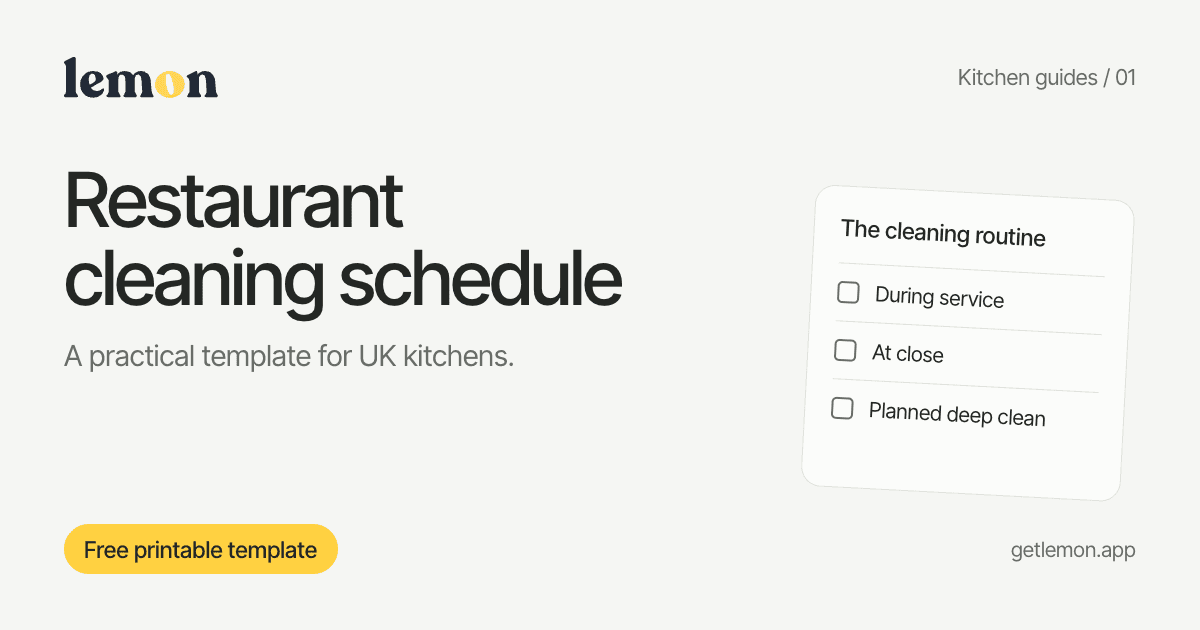
A restaurant cleaning schedule should tell the next person on shift exactly what to clean, when to do it and which method to follow. If a new starter still has to ask what "clean the kitchen" means, the schedule needs more detail.
Use the free template below to turn those instructions into a working routine. It includes a plan for the work and a separate record of what actually happened. Adapt both to your equipment, food preparation and cleaning products before using them.
What should a restaurant cleaning schedule include?
Start with the item or area, the cleaning method, the frequency and the products needed. The FSA's cleaning guidance on GOV.UK calls for a cleaning schedule and record covering what needs cleaning or disinfecting, how often and with which products.
We would also give each task an owner and a clear finishing point. "Clean slicer" leaves room for disagreement. "Follow the slicer's cleaning instruction, including the removable parts, then ask the shift manager to check it before use" gives someone a job they can complete and someone else a result they can check.
Keep the full method accessible beside the schedule. Staff should not need to remember a dilution rate from their first shift.
Can I print a kitchen cleaning schedule template?
Yes. Open the free A4 cleaning schedule and print it, or choose Save as PDF in your browser's print options. There is no sign-up. Fill it in for your kitchen before putting it into use.
Cleaning plan
| Item or area | When to clean | Method and equipment | Product instructions | Person responsible |
|---|---|---|---|---|
Completion record
| Date and time | Task | Completed by | Problem and action taken | Checked by, if required |
|---|---|---|---|---|
Under "Product instructions", record the product name, dilution, contact time and any required rinse or protective equipment. A reference to a clearly labelled instruction sheet is useful when the complete method will not fit in a row.
The plan explains the routine. The completion record shows the work done and any problems. A tick cannot explain that a damaged seal still needs replacing.
Which cleaning jobs belong in each part of the day?
Walk through your kitchen and list the equipment and areas you actually use. The FSA's SFBB cleaning-schedule guidance recommends building the schedule around your premises, training staff and reviewing whether cleaning is effective.
These are planning examples, not a universal timetable. Increase the frequency where your process needs it, and follow the equipment manufacturer's instructions.
| Point in the routine | Examples to consider | What to specify |
|---|---|---|
| During preparation and after use | Preparation surfaces, boards, knives and food-contact equipment | The trigger for cleaning and disinfection, including after raw-food contact |
| Throughout the shift | Handles, taps, controls and other frequently touched areas | Who checks them and when extra cleaning is needed |
| At close | Used equipment, floors, bins and waste areas | The area covered, the method and the person checking the result |
| Planned deeper cleaning | Storage shelving, fridge interiors and less accessible areas | A named day or interval, safe access and arrangements to protect food |
| Manufacturer or specialist schedule | Ice machines, extraction systems and equipment needing dismantling | The approved instruction, competent person and service record |
Keep urgent cleaning separate from the calendar. A raw-food spill needs attention when it happens, even if the next planned clean is later. The FSA's cleaning guidance specifically says to clean and disinfect food areas and equipment after raw-food contact.
Your opening and closing checklist can confirm that the relevant cleaning is complete. The schedule supplies the detail behind that confirmation.
What is the difference between cleaning and disinfecting?
Cleaning removes dirt, grease and food debris. Disinfection then reduces harmful microorganisms on a clean surface. Spraying disinfectant over visible food residue skips the first part.
The FSA's cleaning-effectively safe method describes a two-stage process. Clean first, then apply the disinfectant according to its instructions, including the required contact time. A sanitiser used for both stages still needs separate cleaning and disinfection applications.
Write the actual product instructions into your method. Do not borrow another kitchen's dilution or assume every product has the same contact time. Include any rinse, drying, storage and protective-equipment instructions from the manufacturer.
What should you record when cleaning is missed?
Record the problem and what you did about it. "Not done" leaves the next shift with the same problem and no owner.
Here is a fictional example of a useful entry:
That entry identifies the item, the immediate action, the check and the change to the routine. It does not pretend that the first clean was successful.
For equipment that cannot be cleaned safely or effectively, follow your procedure for taking it out of use and arranging repair or specialist help. Keep any food-safety decision with the action record. Our corrective-action examples explain how to make that record useful at the next review.
Can you keep the cleaning record in Lemon?
You can use Lemon's editable checklists to record cleaning tasks and add notes about problems. Completed checklists record who finished them and when, and can be included in a PDF report. Keep the cleaning instructions and product information available to the team alongside those records.
See how Lemon checklists work if paper sheets are becoming difficult to manage. The app records the work; your kitchen still needs to choose suitable methods and check that people follow them.
What can you put in place tomorrow?
Print the blank plan and walk through one preparation area with the person who cleans it. Complete the instructions together, assign the task and watch the first clean. Adjust anything that is unclear before extending the schedule to the rest of the kitchen.