Food safetyfor cafés.
Lemon keeps a café's food safety records on the phones behind the counter: cabinet and milk fridge temperatures, opening and closing checks, deliveries and allergens. Every record has a name and a time.
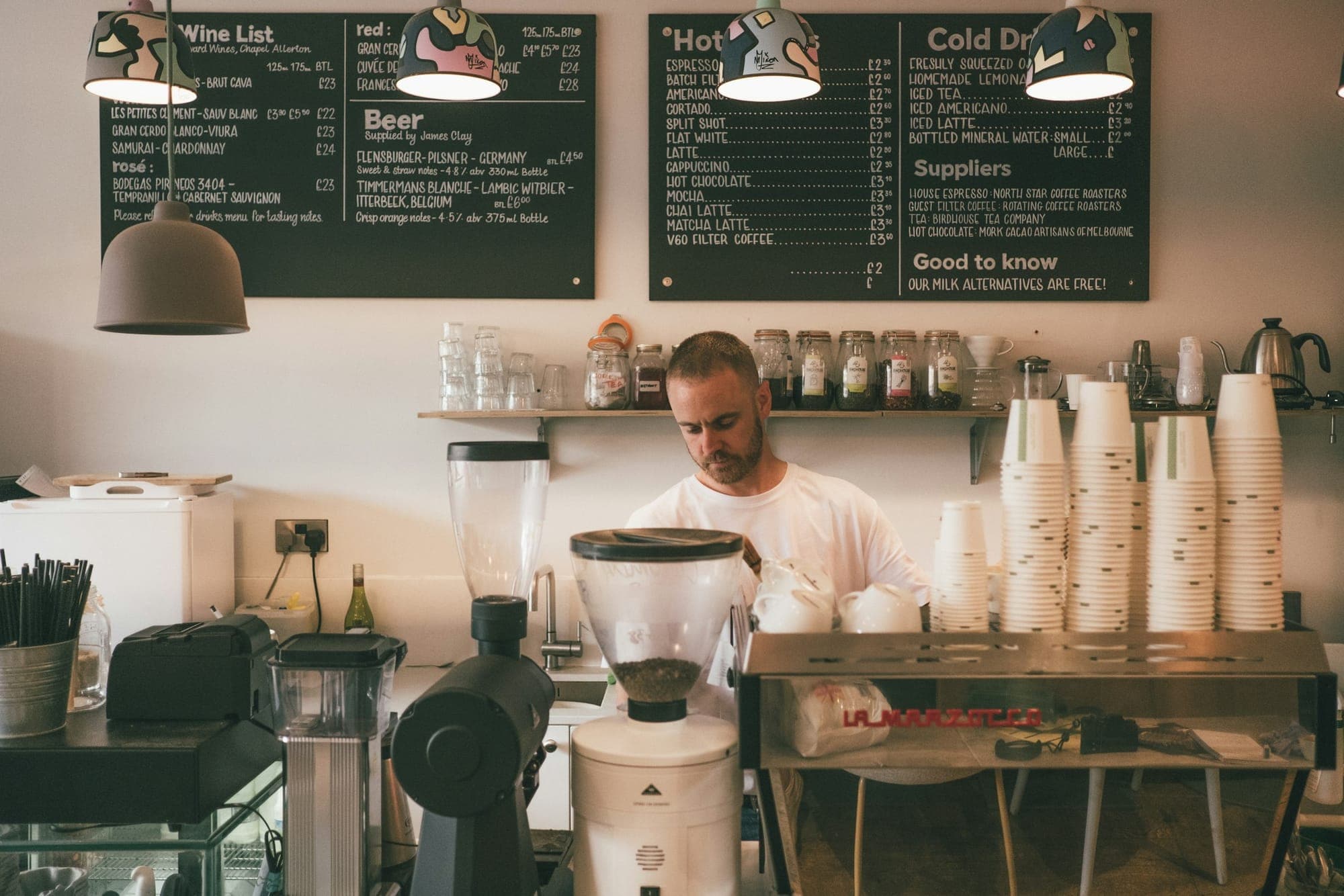
What records does a café need to keep?
Every UK café needs food safety procedures based on HACCP principles, and records that show the team follows them. Most cafés use a ready-made pack: Safer Food, Better Business in England and Wales, CookSafe in Scotland or Safe Catering in Northern Ireland.
Day to day, a café's records come down to these six.
| Record | What it shows | In Lemon |
|---|---|---|
| Fridge and cabinet temperatures | Chilled food stayed cold, checked at least once a day. | Temperature logs |
| Problems and what you did | What went wrong, what the team did about it, and whether food was affected. | Issue reports |
| Opening and closing checks | The counter, coffee machine and cabinet were cleaned, and who did it. | Checklists |
| Chilled deliveries | Supplier, arrival temperature, use-by and condition of each delivery. | Deliveries |
| Allergen information | Which of the 14 allergens each dish contains, so whoever is on the till can answer. | Allergen matrix |
| Staff training | Who has been trained in food safety, and when. | Staff training |
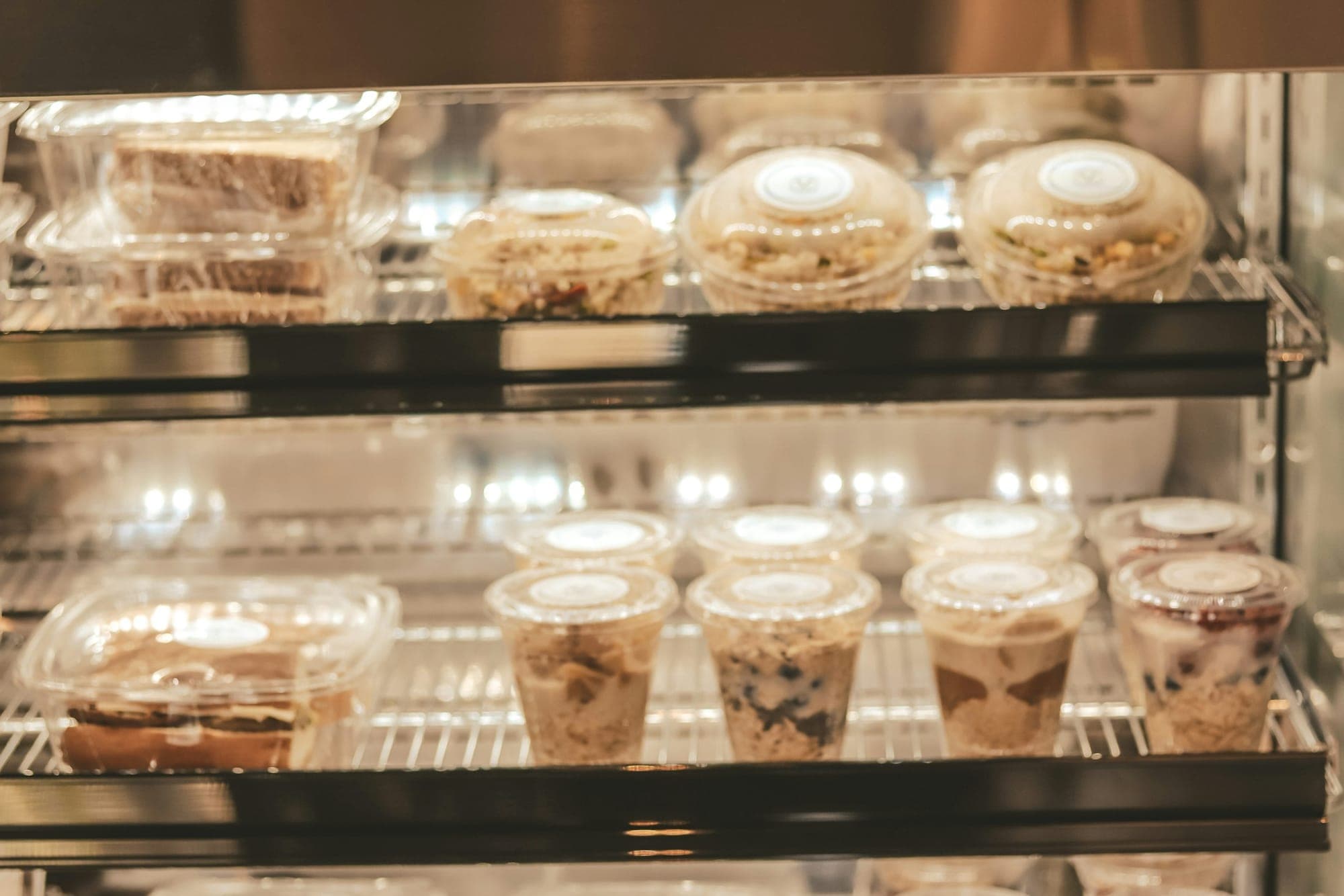
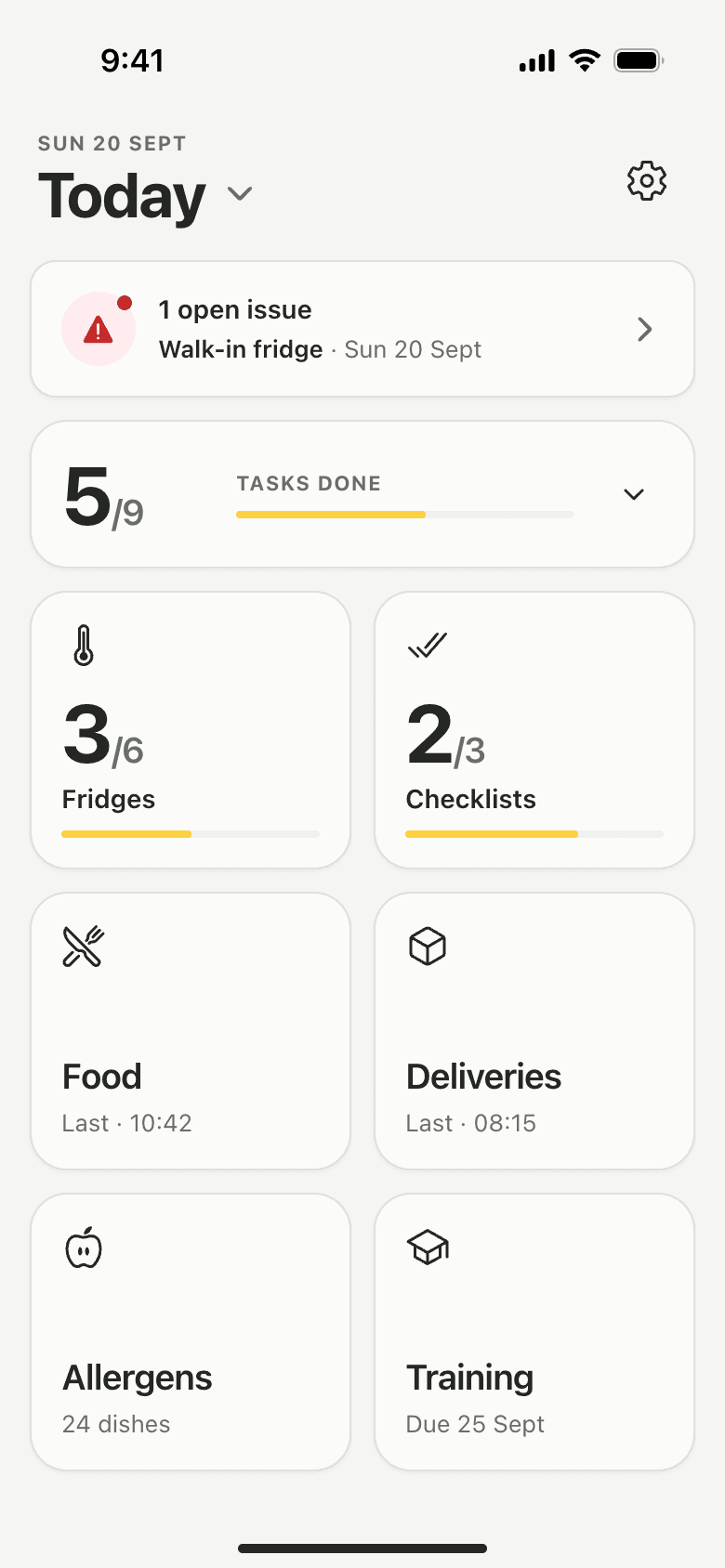
Cabinet checks, twice a day.
Add the display cabinet, the milk fridge and the back fridge, each with the range you work to. The morning and afternoon rounds take them one at a time.
A cabinet that creeps up after lunch is flagged as you type. Saving it opens a short issue form, and the issue stays on Today until a manager resolves it.
How temperature logs work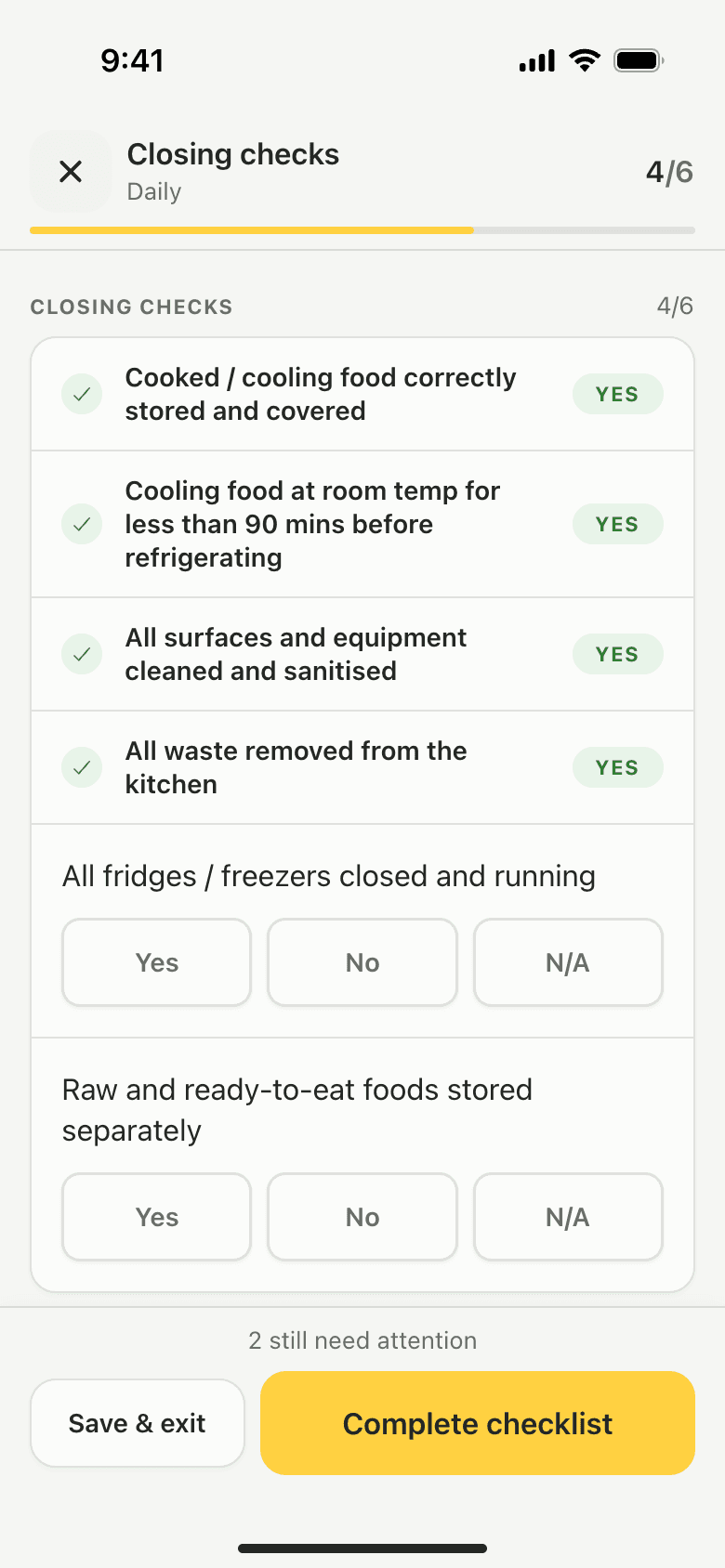
Opening and closing checks, signed by name.
Switch on Opening Checks and Closing Checks, then rewrite them for your counter: steam wand purged, milk jugs washed, cabinet labels in date, hand-wash basin stocked.
Each line is Yes, No or N/A, and a No asks for a note. The finished list shows who did it and when.
How checklists work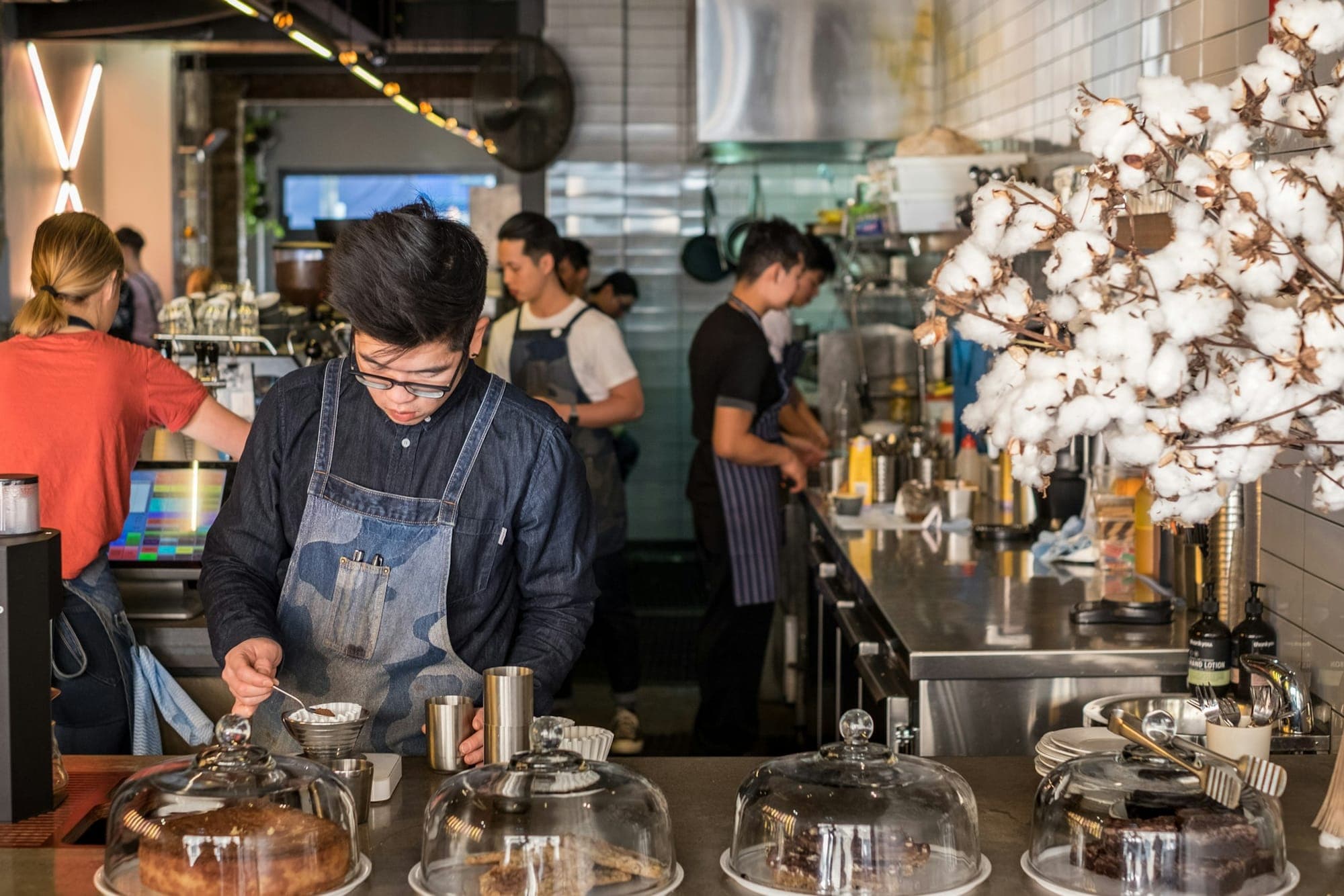
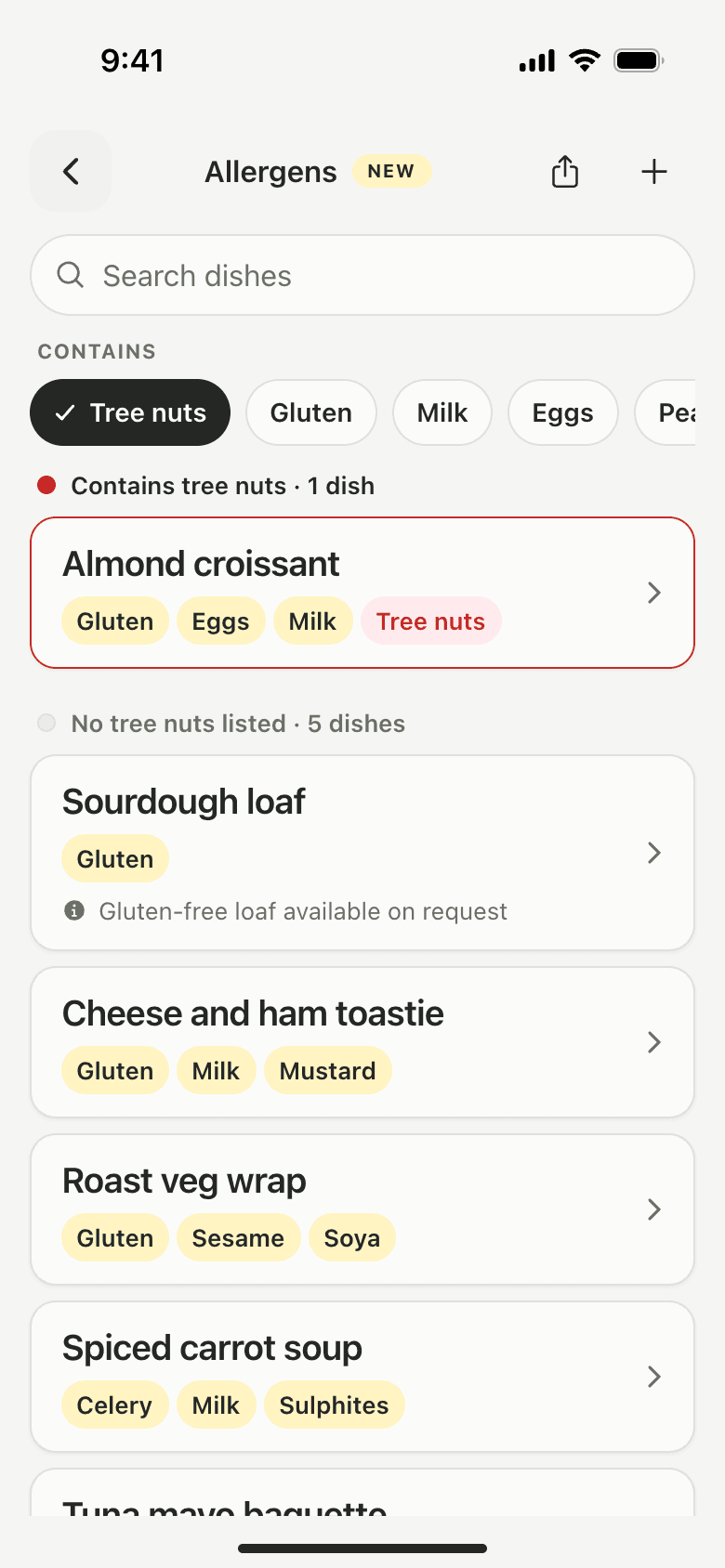
Allergen answers at the till.
Record each cake, sandwich and special against the 14 allergens, with a may-contain list and notes such as the oat milk swap.
Whoever is on the till searches the dish, or picks an allergen to see which dishes contain it. Each dish shows who confirmed it and when.
How the allergen matrix worksExample day
A Tuesday at a twelve-seat café.
Who records what, and what is on file by close. Names and readings are made up.
- 07:20
Open
Sam does the morning round and Opening Checks, under Sam's name.
- 10:45
The sandwich delivery
Supplier, probe reading, use-by and condition, saved before the van leaves.
- 13:10
“Is there sesame in the roast veg wrap?”
Priya searches Allergens and answers from what the kitchen entered.
- 15:30
The cabinet reads 9°C
Lemon flags it. Priya notes the door was left open and moves the sandwiches to the back fridge. The issue stays open until the manager resolves it.
- 17:40
Close
Closing Checks, line by line, with Sam's name and the time.
On file by close
- Two temperature rounds, every reading named and timed
- One issue: what went wrong, what was done, who resolved it
- Opening and closing checks, line by line
- One delivery, with its reading and supplier
- The allergen matrix, with who last confirmed each dish
Export any range of dates as one PDF. Nothing to type up first.
See a sample reportWhat Lemon does not do for a café.
- It does not print labels.Sandwiches wrapped before anyone orders need a full ingredients label.
- It does not work out allergens from recipes.You enter what each dish contains and update it when a recipe changes.
- It does not write your SFBB pack or HACCP plan.The safe methods and the diary sign-off stay yours.
- It does not read fridge sensors.Someone reads the thermometer and types the number.
- It does not do rotas, stock or the till.
Café questions,
answered.
Something else on your mind?hi@getlemon.app
Does a café need a HACCP plan?
A café needs food safety procedures based on HACCP principles, written down and followed. For most cafés that means a ready-made pack such as Safer Food, Better Business, not a plan written from scratch. Lemon keeps the daily records the pack asks for. It does not write the pack.
How often should a café check its fridges?
Your safe method sets the rule, and at least once a day is the usual minimum. Display cabinets are opened all day, so many cafés check at opening and again in the afternoon. Lemon's two daily rounds are built for that.
Do sandwiches made in the morning need allergen labels?
Yes, if you wrap them before anyone orders. That is food prepacked for direct sale, and it needs a label with the name and full ingredients, allergens emphasised. Lemon does not print labels. The matrix covers food you make to order or sell loose.
Do we need new thermometers or sensors?
No. Type the reading from the thermometer you already use, or from the cabinet's own display. Lemon needs no hardware beyond your phones.
Can staff share one login?
They do not need to. Everyone on the team gets their own login at no extra cost, so every record shows who made it. Only owners and managers can change units, checklists or dishes. Lemon is £19 per location per month.
Does Lemon work where the signal is poor?
Temperature readings, food checks, deliveries and issue reports are saved on the phone first and sent when the connection returns, even if the app is closed in the meantime. Checklists still need a connection, so run them where the phone has signal.
Something else on your mind?hi@getlemon.app
Keep reading.
 The opening and closing checklist every UK kitchen should be runningWhat belongs on each list, and the checks most often missed.
- SFBB records in Lemon: checks, reviews and diary sign-offWhat moves into the app and what stays in the pack.
- How often should you check fridge temperatures?The daily minimum, and when an extra check makes sense.
Try it free
for 14 days.
Then £19 per location per month. Every fridge, every team member, staff training included.
No card needed.