HACCP records, without the paper.
A HACCP system is a plan and the records that prove it runs. Lemon is the records half: temperature rounds and probe checks against your limits, what was done when one failed, probe calibration and a PDF. The plan stays yours.
Which parts of HACCP does Lemon cover?
The law asks food businesses for procedures based on seven HACCP principles. The first three are your plan: the hazards, the critical control points and their limits. The other four run every day: monitoring, corrective action, verification and records.
Lemon helps with the daily four. The plan comes from your pack or your own HACCP study: SFBB, CookSafe, Safe Catering or the FSA's MyHACCP service.
| HACCP principle | In a kitchen | Who does it |
|---|---|---|
| 1. Identify the hazards | What could make food unsafe: bacteria, allergens, foreign bodies, chemicals. | Your plan |
| 2. Find the critical control points | The steps where control is essential, such as cooking or chilling. | Your plan |
| 3. Set critical limits | The figure that separates safe from unsafe at each of those steps. | Your plan, with fridge ranges entered in Lemon |
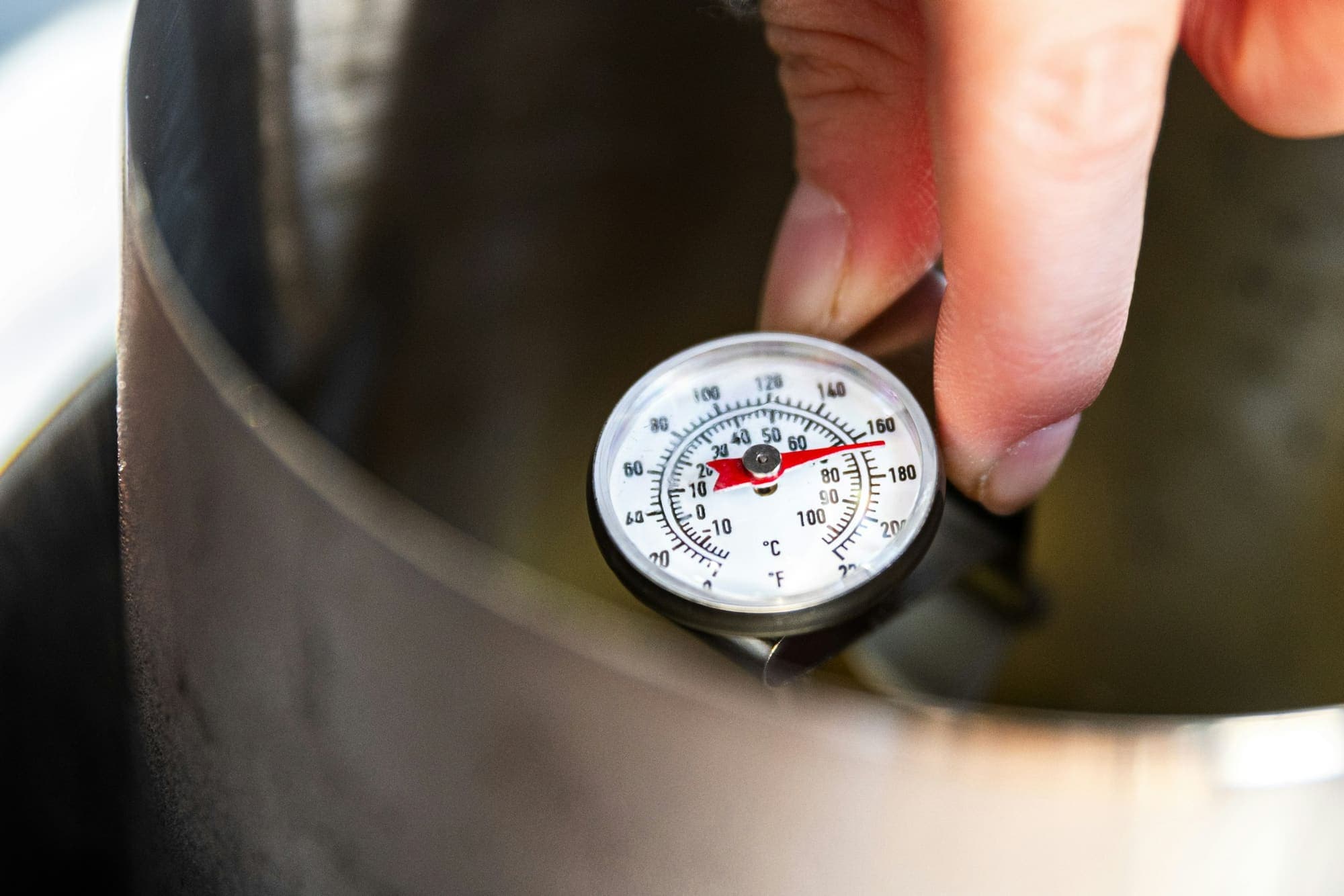
| 4. Monitor | Fridge rounds, and cook, cool, reheat and hot-hold probes, against those limits. | Temperature logs |
| 5. Corrective action | What was done when a check failed, written down beside it. | Issue reports |
| 6. Verify | Checking the system works: calibrated probes, records looked over. | Probe checks |
| 7. Documents and records | Proof the other six happen, in proportion to the size of the business. | Reports and exports |
Monitoring, against the limits you set.
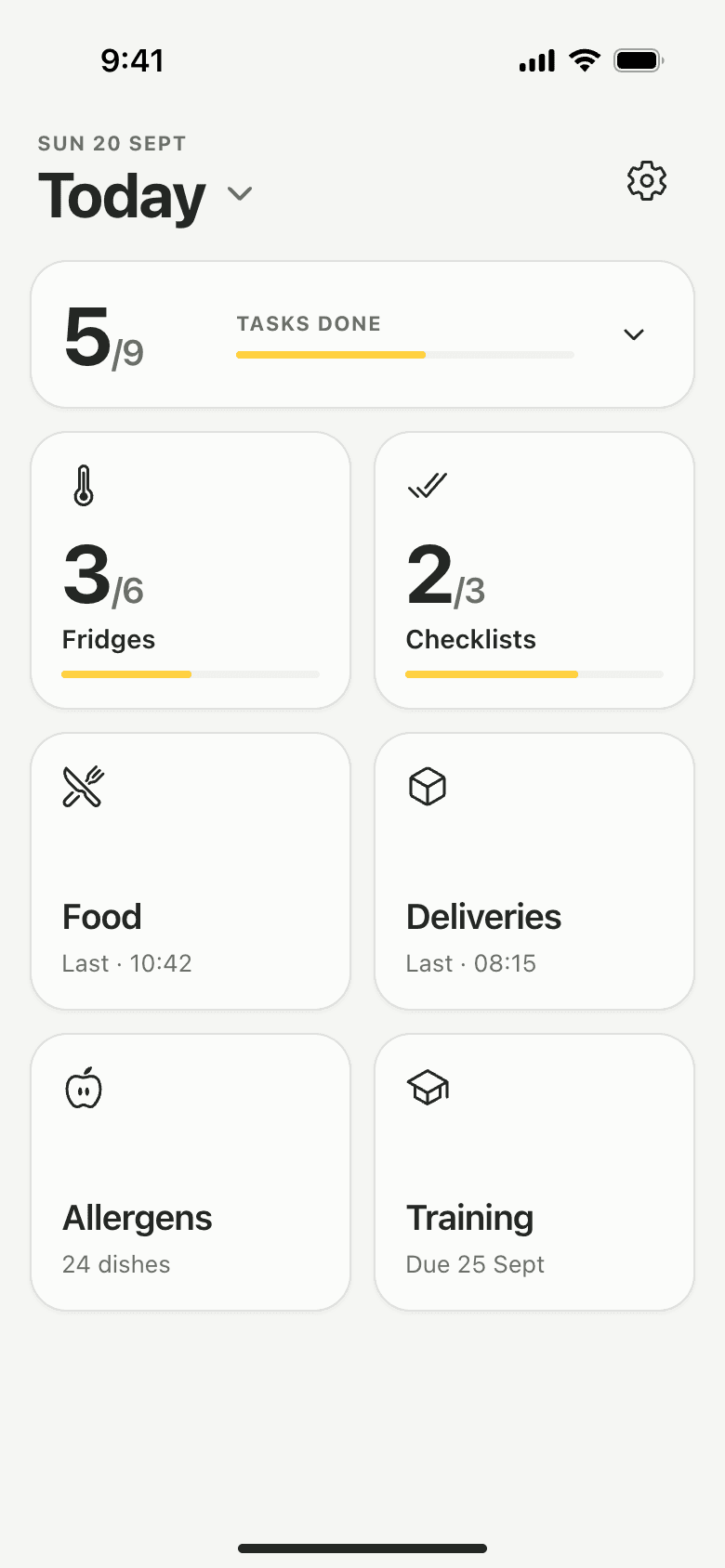
Give each fridge, freezer and hot-hold unit the limits from your plan. Two rounds a day take them one at a time, and a reading outside its limits is flagged as you type.
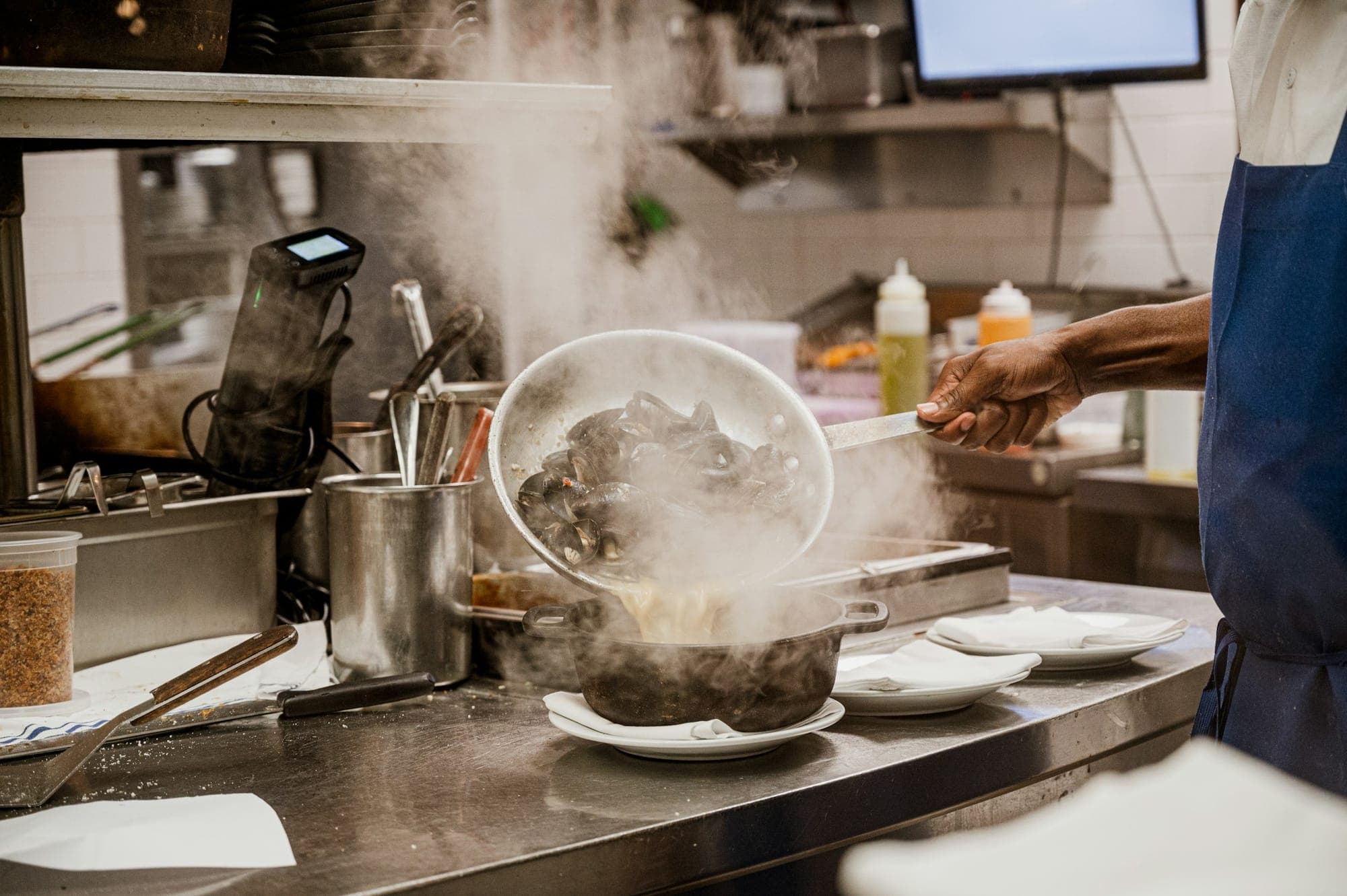
For food, Cook, Cool, Reheat and Hot-hold each print a target on the button, and Lemon saves your reading beside it. Where your plan sets a different limit, work to the plan.
How temperature logs work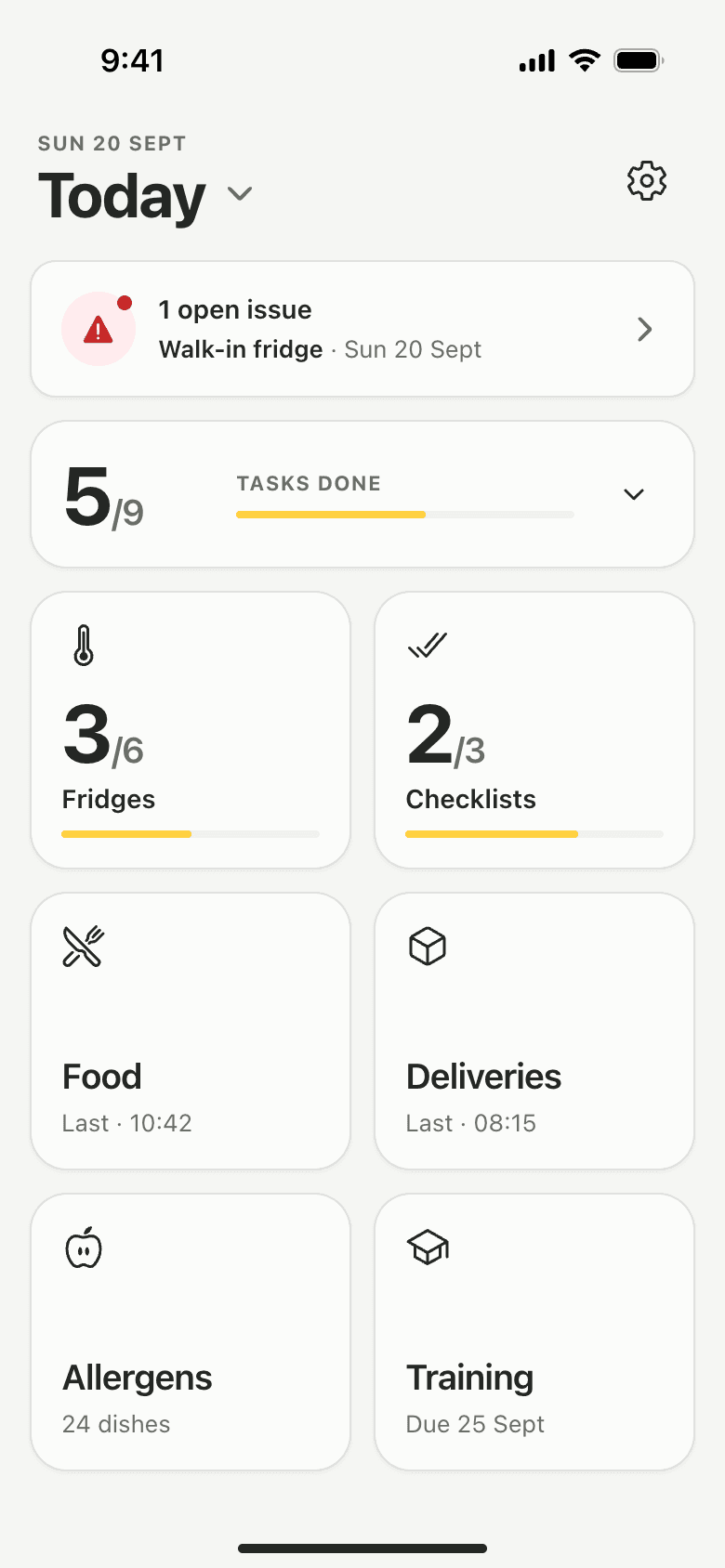
Corrective action, kept with the failed check.
Saving an out-of-range fridge reading opens an issue: what the problem was and what was done, with one-tap answers to start from. It stays on Today until a manager or owner resolves it.
A food check below its target still saves and asks what you did about it. The PDF prints that beside the reading, and lists any out-of-range reading with no action recorded.
Issues and corrective actions
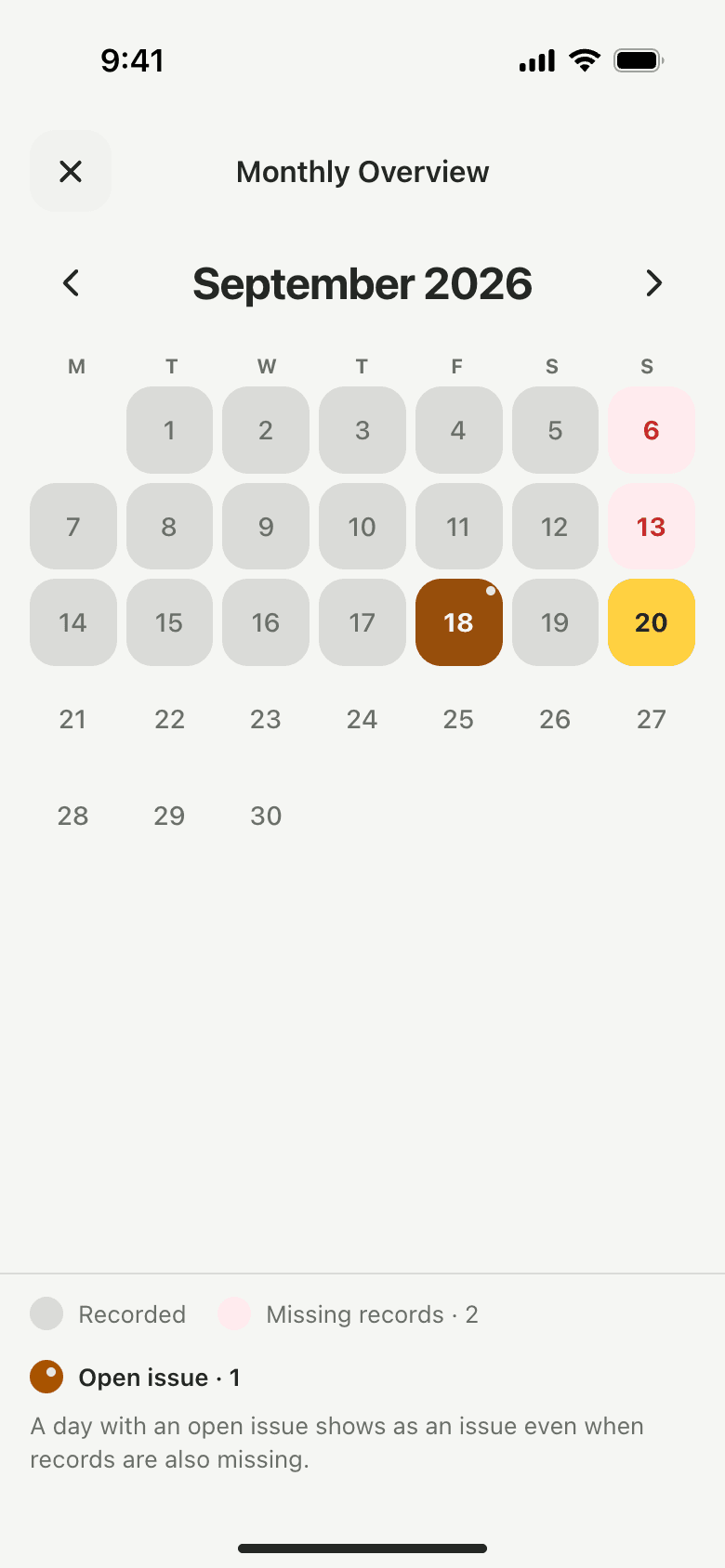
Verification: calibrated probes and a month at a glance.
Add your probe thermometers and record a check on each: iced water should read between -1 and 1°C, boiling water between 99 and 101°C. One is due every 30 days, and Settings shows which are due or failed.
The monthly overview colours each day recorded, missing records, open issue or closed, so a manager can see a pattern before the next review.
How probe checks workExample
One control point, from the plan to the review.
Cooling cooked rice in a busy kitchen, through every daily principle. Names and readings are made up.
- The plan
The limit
The kitchen's plan says cooked rice is cooled to 8°C or below within 90 minutes, then chilled.
- 14:10
Monitor
Jo probes the tray at 90 minutes and types 13°C. Lemon warns before saving that it misses the Cool target.
- 14:12
Correct
Jo writes what was done on the line under the reading: batch thrown away, next one in shallower trays.
- Monday
Verify
The head chef records an iced and boiling water check on the probe Jo used. It passes.
- Month end
Review
The month's PDF shows the failed cool with its action. The head chef updates the cooling step in the plan.
What the records prove
- The limit was checked, by whom and when
- The failure and what was done, on the same line
- The probe that took the reading was calibrated
- The review that changed the method
The change itself is written in your plan. Lemon holds the records that show why it was made.
See a sample reportWhat Lemon does not do for a HACCP system.
- It does not write your HACCP plan.The hazard analysis, control points and limits come from SFBB, CookSafe, Safe Catering, MyHACCP or your own study.
- It is not enough on its own.You also need the plan, staff trained in it, cleaning and pest control that work, and someone reviewing the system.
- It does not choose your limits.Fridge ranges are whatever you set, and the food targets are figures printed on the buttons. Work to your plan.
- It does not monitor around the clock.There are no wireless probes or sensors. Someone takes each reading.
- It does not approve your system.The records show what was done. Your local authority judges the system.
HACCP questions,
answered.
Something else on your mind?support@getlemon.app
Does a small restaurant need HACCP?
It needs food safety procedures based on HACCP principles: the FSA's guide to managing food safety says so, and the law sets out the seven principles. GOV.UK points small caterers to ready-made packs built on them, such as Safer Food, Better Business, and Food Standards Scotland publishes CookSafe. The FSA adds that procedures may not be needed where processes are very simple, and to ask your local authority.
Does Lemon write my HACCP plan?
No. Lemon keeps the records that show your plan is followed. The hazards, control points and limits come from your pack or plan. GOV.UK lists the FSA's MyHACCP service and HACCP plan templates for writing one, and some apps, such as FoodDocs, help write the plan itself.
Is a HACCP app enough on its own?
No. Records only prove a system that exists. You also need the plan, staff trained to follow it, good hygiene in the kitchen, and reviews, which GOV.UK says should happen regularly and whenever your food processes or suppliers change.
What are the seven HACCP principles?
Identify the hazards, identify the critical control points, set critical limits, monitor them, take corrective action when monitoring shows a problem, verify that the system works, and keep documents and records in proportion to the size of the business. They are set out in Article 5 of Regulation (EC) No 852/2004.
Can Lemon take readings from wireless HACCP probes?
No. Use the probes you already have and type the reading. Once your probes are added in Lemon, a food check can also say which probe took it.
How much does a HACCP app cost?
Lemon is £19 per location per month. That covers every record on this page, the whole team and staff training. Try it free for 14 days, with no card.
Something else on your mind?support@getlemon.app
Keep reading.
 HACCP corrective-action examples for UK kitchensWorked examples for a warm fridge, a short cook and a failed hot-hold.
- SFBB, CookSafe, Safe Catering or MyHACCP? Choose the right UK packWhich official pack fits your nation and your kind of business.
- Food safety records for UK restaurants: a practical checklistEvery record a restaurant keeps, and how long to keep it.
Try it free
for 14 days.
Then £19 per location per month. Every fridge, every team member, staff training included.
No card needed.